April 16, 2026 • Cara Whitfield • 9 min reading time • Prices verified June 4, 2026
Shower Panel Towers with Body Jets: Full Hydrotherapy or Overpriced Novelty?
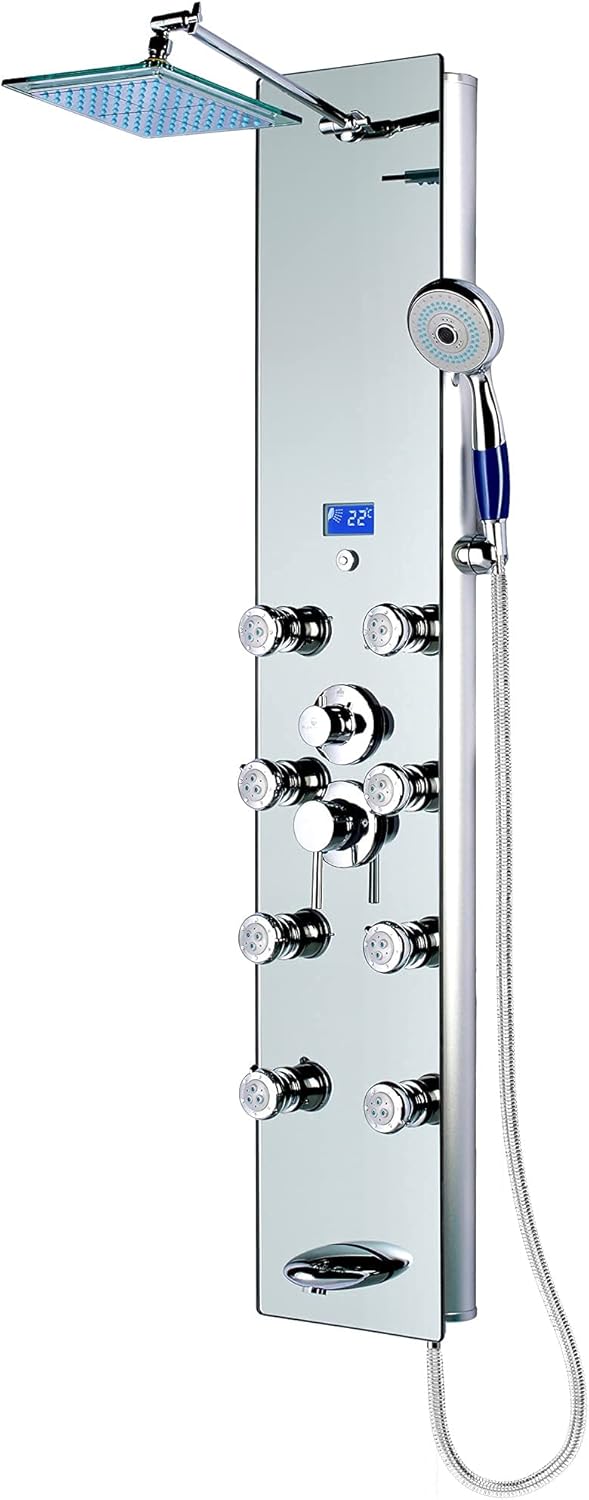
A shower panel tower is exactly what it sounds like: a floor-to-ceiling (or wall-mounted) vertical panel — usually aluminum or tempered glass — fitted with multiple water outlets at different heights. Instead of a single showerhead hitting your shoulders, you get a top-mounted rain head, a hand shower on a slide bar, and a row of body jets (nozzles that spray horizontally into the stall) aimed at your torso, hips, and lower back simultaneously. The pitch is that you step into the shower and get surrounded by water from every angle, the way a high-end hotel spa or hydrotherapy suite works. The honest question — the one this guide is going to answer directly — is whether that experience holds up in a real home bathroom, or whether the gap between the showroom demo and your actual 60-inch stall is wide enough to make the whole category a regret purchase.
If you’re mid-renovation, comparing panel systems in the $400–$1,200 range, or trying to explain to a skeptical partner why this isn’t just a fancy gadget, you’re in the right place. We’ll cover what genuinely works, what the specs won’t tell you, and the decision framework that separates “right for my situation” from “expensive mistake.”
| EDITOR'S PICKBlue Ocean 52" Aluminum SPA392M… | Mid-tierBlue Ocean 52" Aluminum SPA392B… | Budget pick[ROVOGO LED Shower Panel Tower S](https://www.amazon.com/dp/B0D14FV685?tag=greenflower20-20)… | |
|---|---|---|---|
| Height | 52" | 52" | 46.5" |
| Material | Aluminum | Aluminum | Stainless Steel |
| Body Jets | 8 | 8 | 4 |
| Handheld | — | — | ✓ |
| LED | — | — | ✓ |
| Price | $369.00 | $359.00 | $132.99 |
| See on Amazon → | See on Amazon → | See on Amazon → |
What Body Jets Actually Do (and What They Can’t)
The clinical term is hydrotherapy — the therapeutic use of water pressure, temperature, and direction to act on soft tissue, joints, and the nervous system. Legitimate hydrotherapy research, including work cited in Architectural Digest’s 2025 spa bathroom design overview, supports warm-water immersion and targeted water pressure for reducing muscle tension and improving circulation. That part is real.
What body jets add, specifically, is directional pressure at mid-body height — the zone a fixed overhead showerhead simply cannot reach effectively. Owners of panel systems consistently report meaningful relief at the lumbar (lower back), hip flexors, and the mid-back rhomboid area — the same zones that accumulate the most tension for desk workers and athletes. If you are buying a panel tower specifically for lower-back recovery or post-workout muscle flushing, the functional case is sound.
Where the category gets oversold is in the phrase “full hydrotherapy.” A true hydrotherapy circuit — the kind used in physical therapy or thermal spa settings — uses calibrated water pressure, often between 40–80 PSI at the jet face, in timed alternating-temperature sequences. Residential shower panels are delivering municipal water pressure, typically 45–80 PSI at the supply line, split across multiple simultaneous outlets. The practical result: each individual jet is running at meaningfully less pressure than that headline number suggests once flow is divided. Owners in long-run reviews across aggregated sources note that panels with more than six simultaneous body jets can feel “gentle” rather than “therapeutic” unless the home’s supply pressure is on the high end of that range.
The honest position: body-jet shower panels deliver genuine mid-body coverage and real relaxation value. They are not clinical hydrotherapy machines. That distinction matters for your buying decision.
The Numbers That Drive the Decision
By the numbers — what to verify before you buy:
| Variable | Minimum Viable | Recommended |
|---|---|---|
| Supply line pressure | 45 PSI | 60–80 PSI |
| Supply pipe diameter | ½ inch | ¾ inch |
| Stall footprint | 36 × 36 in | 36 × 48 in or larger |
| Combined panel flow rate | ≤ 2.5 GPM (federal max) | Look for WaterSense ≤ 2.0 GPM |
The EPA’s WaterSense program sets the federal showerhead maximum at 2.5 gallons per minute (GPM); California and Colorado enforce a stricter 1.8 GPM residential limit. Per the EPA WaterSense labeled showerheads fact sheet, fixtures bearing the WaterSense label meet the 2.0 GPM threshold while maintaining acceptable pressure through flow optimization. Panel towers sold by reputable brands like Hansgrohe, Grohe, and Kohler publish GPM ratings for the system as a whole — that’s the number that matters for compliance and your water bill, not the per-jet figure.
Family Handyman’s guide on increasing home water pressure notes that the single biggest performance variable for multi-outlet systems is supply pipe diameter: homes plumbed with ½-inch supply lines to the shower valve will see pressure drop noticeably when more than two or three jets open simultaneously. If your rough-in uses ½-inch pipe and you’re not doing a full remodel, factor in the cost of upgrading to ¾-inch as part of the panel budget.
Panel Tiers: Where the Real Differentiation Lives
Entry-tier ($200–$500): Brands in this range — including house-label panels from big-box retailers and imported systems that don’t carry a traceable manufacturer warranty — typically use ABS plastic jet bodies behind a brushed-aluminum face. Published specs frequently list six to eight body jets, but flow is often fixed (no pressure adjustment per zone). Consumer Reports’ showerhead buying guidance notes that adjustability — the ability to close off jets you aren’t using to concentrate pressure on the ones you are — is a key functional differentiator, and it’s largely absent at this tier. These panels can look credible in a photo and feel disappointing in use.
Mid-tier ($500–$900): This is where the value proposition becomes defensible. Hansgrohe’s Crometta and Croma E panel systems, Grohe’s Rainshower SmartActive tower configurations, and Kohler’s DTV+ compatible panels all land in this band. Key upgrades: brass or stainless jet bodies (corrosion durability owners consistently cite in long-run reviews), individual jet zone shutoffs, and diverter valves that let you run overhead rain + body jets simultaneously at reduced flow, or body jets only at full pressure. This tier also introduces brand-backed finish warranties — Hansgrohe’s LifeStyle warranty covers finish and function; Grohe’s StarLight finish carries a separate corrosion guarantee. Those aren’t marketing words when you’re making a $700 investment in a wet environment.
High-tier ($900–$2,000+): Thermostatic integration is the defining feature here. Systems like Hansgrohe’s ShowerSelect or Grohe’s Grohtherm Cube panel configurations add a thermostatic valve — a mechanism that locks water temperature to within ±1°C regardless of what else is happening in the house’s plumbing. For households with children, or for users doing contrast therapy (alternating warm and cooler water), this is not a luxury feature; it’s a safety and usability feature. Architectural Digest’s 2025 spa bathroom coverage specifically calls out thermostatic shower systems as the dominant high-end renovation specification, replacing traditional pressure-balance valves in master-bath remodels at the $50,000+ budget level.
The Installation Reality Check
This Old House’s shower panel installation guide identifies three installation categories, and which one applies to you determines whether a panel tower is even viable:
New construction or full gut renovation: Full flexibility. Size the stall correctly (36 × 48 minimum for comfortable body jet coverage), rough in ¾-inch supply, position blocking in the wall for panel weight (aluminum panels run 25–45 lbs; glass panels can exceed 60 lbs). No compromises required.
Partial remodel (new tile, existing plumbing): Viable with planning. The critical check is supply pipe diameter and the existing valve location. Most panel towers are designed around a centered supply inlet; if your valve is offset, you’ll need a plumber to re-rough before the panel goes in. Budget $300–$600 for that work and factor it into your total cost comparison.
Retrofit into an existing stall: This is where most regret purchases happen. A panel tower dropped into an existing 36 × 36 stall without addressing supply pressure or pipe diameter will underperform spec. The jets will be running at reduced pressure, the stall will feel crowded, and the water use will exceed what the existing drain can handle if the system isn’t WaterSense-rated. Consumer Reports’ buying guidance flags drain capacity as a frequently overlooked specification — panel towers running simultaneously at 2.0–2.5 GPM need a drain sized for that flow, not the 1.5 GPM that a single showerhead assumes.
Tradeoffs Worth Naming Directly
Cleaning burden is real. Body jets accumulate mineral deposits (calcium and lime) at the nozzle face. Systems with rubber nozzle tips — Hansgrohe’s QuickClean, Grohe’s SpeedClean, Kohler’s MasterClean — let owners wipe off deposits with a finger; fixed ceramic jets require soaking or a descaling cycle. In hard-water markets (Phoenix, Las Vegas, Dallas), this is not a minor consideration. Aggregated owner reviews in hard-water regions consistently rate self-cleaning nozzle design higher than any other maintenance variable over a 2–5 year ownership window.
Visual weight in small spaces. A panel tower is a vertical slab 6–8 inches deep and 60–84 inches tall. In a 36 × 36 stall, it occupies meaningful real estate and creates a visual centerpiece that either reads as intentional spa design or as an awkward intrusion, depending on how the rest of the bathroom is finished. Architectural Digest’s coverage of spa bathroom trends notes that panels read best in frameless-glass enclosures with minimal competing hardware — the panel is the fixture statement.
Water cost math. At a U.S. average residential water rate of approximately $0.007 per gallon (2026 market conditions), running a 2.0 GPM panel system for a 15-minute daily shower costs roughly $0.21 per shower versus $0.13 for a standard 1.75 GPM showerhead. The annual delta is approximately $29. That’s not a dealbreaker, but it’s worth knowing.
The Decision Framework
If your supply pressure is below 45 PSI, your pipe is ½-inch, or your stall is under 36 × 36: don’t buy a panel tower yet. Fix the infrastructure first, or you’re paying $600+ to be disappointed.
If you’re doing a full gut renovation or new construction with proper rough-in, and your primary use case is lower-back or mid-body recovery: the mid-tier ($500–$900) justifies itself. Look specifically for individual jet zone shutoffs and brass jet bodies. Hansgrohe Croma E and Grohe Rainshower SmartActive tower configurations represent the editorial consensus in this range — published specs, finish warranties, and long-run owner feedback are all trackable.
If you have thermostatic integration on your wish list, children in the household, or you’re designing around contrast therapy or a formal wellness routine: step to the high tier and don’t look back. The thermostatic valve alone changes the daily use experience enough that owners in long-run reviews rarely report regret at that price point.
If you’re working with an existing stall, builder-grade supply plumbing, and a budget under $400: a high-quality dual-function handheld-plus-rain combination — Delta In2ition, Moen Engage Magnetix — will deliver a better functional upgrade per dollar than a panel tower under those constraints. The panel category earns its price when the infrastructure supports it. Without that foundation, it’s a novelty with a slow drain.