May 12, 2026 • Cara Whitfield • 9 min reading time • Prices verified June 4, 2026
8-Inch vs. 12-Inch vs. 16-Inch Rain Heads: How Size Changes Pressure, Coverage, and Renovation Decisions
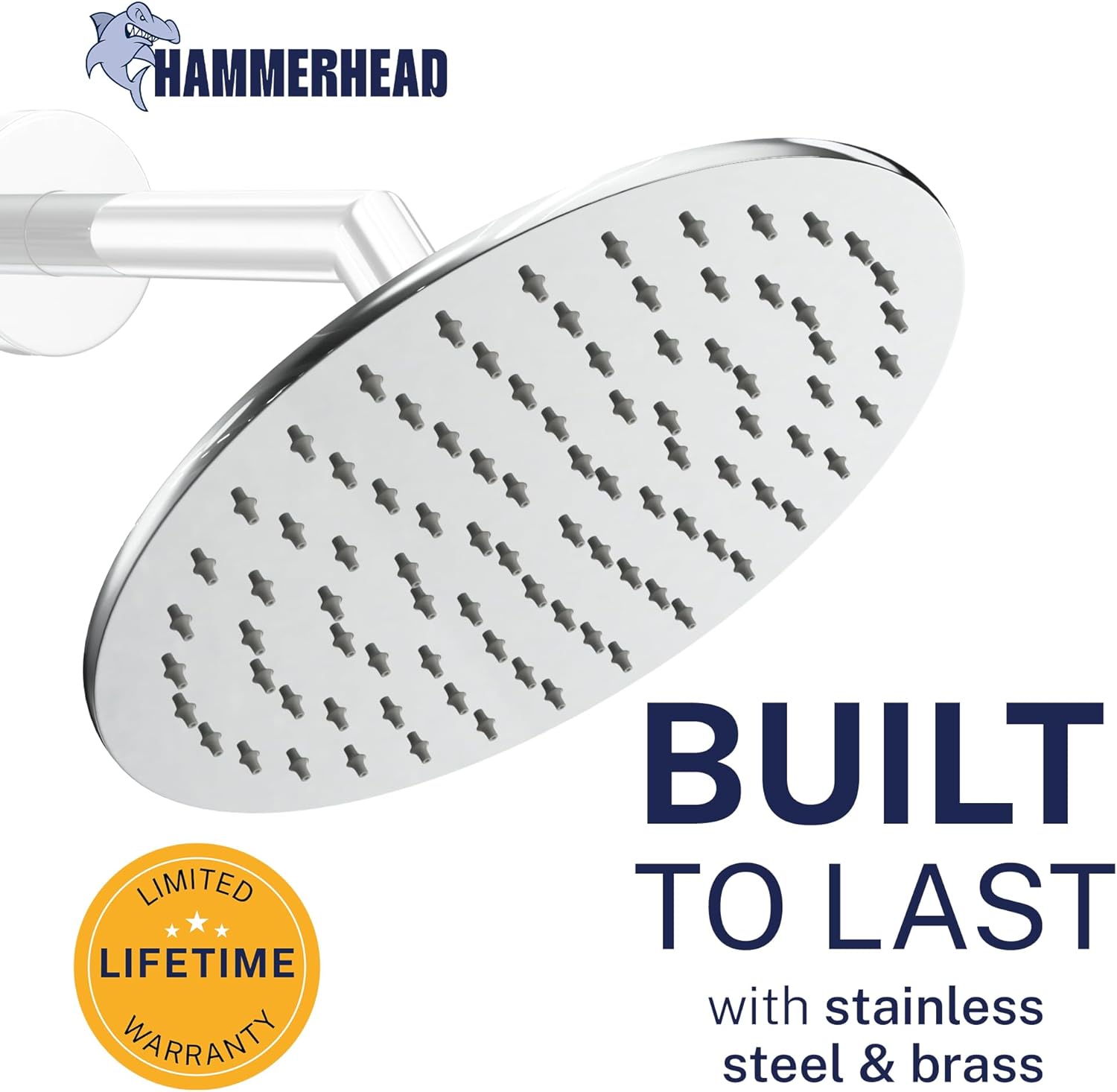
A rain shower head is exactly what it sounds like: a large, ceiling-style fixture designed to mimic the sensation of standing in warm, gentle rainfall — wide coverage, softer impact, full-body saturation rather than a concentrated jet aimed at one spot. Unlike a standard shower head that shoots a focused stream, rain heads spread the same volume of water across a much bigger surface area. That sounds like an obvious upgrade, and often it is — but the size of that surface area is where the decision gets complicated. An 8-inch head and a 16-inch head can have identical water-flow ratings and feel completely different in use. This guide explains exactly why, maps each size tier to the renovations and plumbing conditions where it actually performs, and gives you the decision framework to match diameter to your specific project.
| EDITOR'S PICK[G-Promise All Metal 14 Inch Rai…](https://www.amazon.com/dp/B0D6VY2YKJ?tag=greenflower20-20) | Mid-tier[HammerHead Showers® Solid Metal…](https://www.amazon.com/dp/B01N1UJM2Q?tag=greenflower20-20) | Budget pick[NearMoon Rain Shower Head](https://www.amazon.com/dp/B07MY4S98P?tag=greenflower20-20) | |
|---|---|---|---|
| Size | 14 Inch | 8 Inch | 8 Inch |
| Material | Metal | Solid Metal | Stainless Steel |
| Flow rate | — | 2.5 GPM | — |
| Handheld | ✓ | — | — |
| Diverter | 3-Way | — | — |
| Thickness | — | — | Ultra-Thin |
| Price | $139.86 | $79.95 | $19.99 |
| See on Amazon → | See on Amazon → | See on Amazon → |
Why Size and Pressure Are Inversely Related (and Why This Matters More Than Your Spec Sheet Shows)
Here’s the physics that the marketing materials tend to gloss over: pressure at the spray face drops as diameter increases, because the same volume of water is being spread across a larger plate area.
The federal maximum for shower heads — established by the EPA WaterSense Program in its Showerhead Specification Version 2.0 — is 2.0 GPM at 80 PSI, with WaterSense-certified fixtures capped at 1.8 GPM. Most new construction plumbing in 2026 delivers between 40 and 65 PSI at the shower valve. That’s your working budget. It doesn’t change based on the head you choose.
What does change is how that fixed flow is distributed:
By the numbers:
- 8-inch rain head at 1.8 GPM → approximately 50 sq. in. active spray area → denser water column, more perceived pressure
- 12-inch rain head at 1.8 GPM → approximately 113 sq. in. active spray area → noticeably softer, wider coverage
- 16-inch rain head at 1.8 GPM → approximately 201 sq. in. active spray area → gentlest feel; needs high static pressure (≥60 PSI) or a higher-flow valve to feel satisfying
This is the core tradeoff. A 16-inch head at low household pressure can feel like a light drizzle — atmospheric, yes, but not therapeutic. A quality 8-inch head at standard pressure can deliver genuine muscle-relief density. Bob Vila’s editorial coverage of shower head flow rate and water pressure consistently identifies homes with static supply pressure below 45 PSI as the trouble zone for large-format rain heads — owners in that pressure range report disappointment with anything above 12 inches unless compensating measures are in place.
The Three Size Tiers: What Each One Actually Delivers
8-Inch Rain Heads: The Pressure-Friendly Entry Point
Eight-inch heads occupy a sweet spot that the market undervalues aesthetically but overdelivers on sensation. Brands like Hansgrohe’s Croma Select E series and Kohler’s mid-range Artifacts line both offer 8-inch options that generate a noticeably denser spray than their larger siblings at the same GPM rating.
The practical renovation case for 8-inch is strong:
- Works with standard ½-inch supply lines and existing arm or ceiling rough-in without rerouting
- Ceiling mount isn’t required — a standard shower arm extension positions an 8-inch head well for a rainfall effect
- Adequate for stall showers under 36×36 inches without coverage gaps at the periphery
- Pressure performance at 45–60 PSI is reliable; owners consistently report satisfying sensation even on older supply lines
The limitation is coverage: if you have a 48-inch or wider walk-in shower, an 8-inch head will leave you rotating under it to get full-body coverage. It also reads as modest aesthetically — Architectural Digest’s spa bathroom design coverage notes that the visual anchor of a luxury rain shower increasingly requires a minimum 12-inch plate to register as a design statement in larger master baths.
Best fit: Stall conversions, guest baths, smaller master bath upgrades, homes with supply pressure under 50 PSI, or first-time upgraders stepping up from builder-grade hardware.

NearMoon
$19.99
In stock on Amazon
Check price on Amazon12-Inch Rain Heads: The Renovation Sweet Spot
Twelve inches is where the market concentrates for good reason. It’s the diameter at which the sensation shift from “shower” to “rainfall experience” becomes perceptible to most users, while remaining manageable from a plumbing and pressure standpoint.
The Grohe Rainshower SmartActive 12-inch variants and Hansgrohe’s Raindance Select 12-inch series are the editorial reference points in this category — their nozzle geometry and spray plate engineering are specifically designed to produce a high-coverage feel at 1.8 GPM by optimizing droplet size and spacing, not by consuming more water. Hansgrohe describes this as PowderRain (an ultra-fine mist) or RainAir (air-infused streams) depending on mode — in plain English, they’re using nozzle design to make less water feel like more, which is how they maintain satisfying coverage at compliant flow rates.
This Old House, in their rain shower head buying guide, notes that the rough-in compatibility check is the most commonly skipped step in DIY installs. Most 12-inch ceiling-mount heads require a ½-inch IPS ceiling outlet; confirming your rough-in before ordering a specific finish is the difference between a head going in smoothly and that same head sitting in a box while you reschedule your plumber.
Renovation math to run before specifying a 12-inch head:
- Supply pressure at the shower valve: measure at the supply shutoff or have your plumber check. You want ≥50 PSI.
- Ceiling height: ceiling-mount 12-inch arms typically need 7’6” or higher for comfortable clearance without the head feeling oppressive.
- Rough-in compatibility: confirm ½-inch IPS ceiling outlet before ordering.
Best fit: Master bath renovations with 36×48-inch or larger walk-in footprints, standard to above-average supply pressure (50–70 PSI), buyers in the $200–$320 range, and anyone for whom the aesthetic statement matters alongside the sensation.
HammerHead
$79.95
In stock on Amazon
Check price on Amazon16-Inch Rain Heads: Full-Coverage Luxury With Real Prerequisites
A 16-inch rain head is a commitment — to a specific aesthetic, a specific ceiling infrastructure, and ideally a specific supply pressure. Done right, the experience is legitimately different: full-body water immersion with no dry zones, the kind of coverage you feel from scalp to shoulders without any repositioning. This is the fixture at the center of the $380–$650+ tier from Kohler (Artifacts 16-inch), American Standard’s Studio S line, and Hansgrohe’s Rainmaker Select 460.
The prerequisites are non-negotiable:
1. Supply pressure ≥60 PSI at the valve. Below this threshold, a 16-inch head at 1.8 GPM will genuinely underwhelm. Bob Vila’s editorial guidance on shower head pressure performance makes clear that owner satisfaction at this size tier correlates almost entirely with whether supply pressure was verified and optimized before installation.
2. Dedicated thermostatic valve or high-volume pressure-balancing valve. Standard builder-grade pressure-balance valves (typically rated 1.75–2.0 GPM) may throttle a 16-inch head in a way that makes simultaneous body spray use impractical. Thermostatic systems — such as Hansgrohe’s iBox or Grohe’s Grohtherm series — are specified precisely to handle multi-outlet flow at consistent temperature and pressure.
3. Ceiling structural support and proper rough-in. A 16-inch head weighs 4–8 lbs depending on material; ceiling-mount arms introduce meaningful leverage loads. Family Handyman’s installation guidance on rain shower heads explicitly recommends blocking between ceiling joists for heads above 12 inches, installed during the rough-in phase before drywall is hung.
4. Water softening in hard-water markets. Nozzle fouling is noticeably more problematic on large-format heads because mineral scale is harder to wipe uniformly across a 16-inch plate. Silicon nozzle designs — standard on Kohler and Hansgrohe at this tier — mitigate this, but the maintenance commitment is real.
Best fit: New construction or full gut renovations where plumbing is being redesigned, master bath projects with dedicated thermostatic systems, supply pressure ≥60 PSI confirmed, and buyers for whom the visual and sensory ceiling experience is the design anchor of the bathroom.
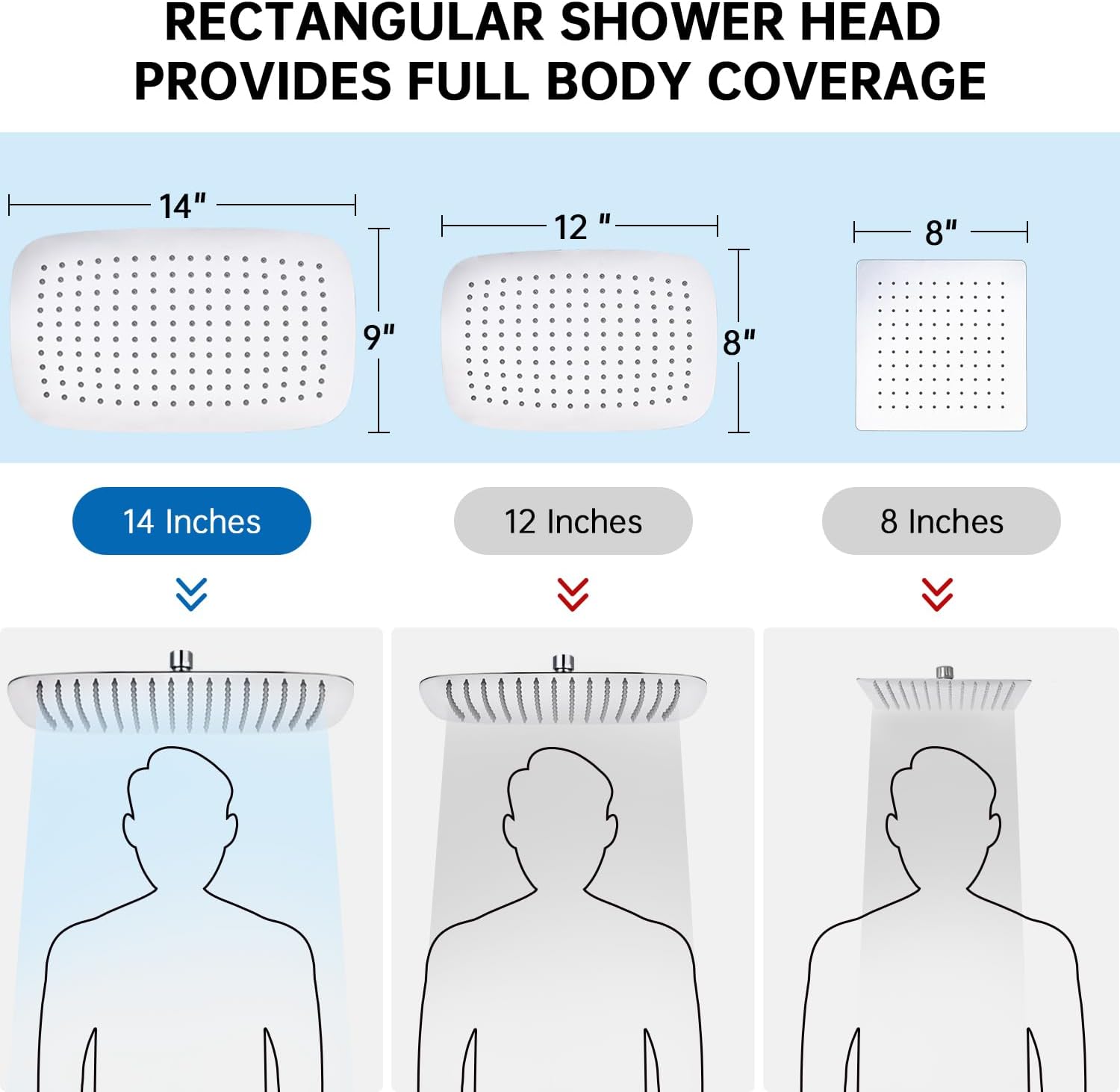
G-Promise
$139.86
In stock on Amazon
Check price on AmazonThe Renovation Decision You’re Actually Making
Here’s what this size choice is really deciding in the context of a renovation:
If you’re retrofitting an existing shower (replacing a standard arm-mount head without touching the plumbing): an 8-inch or well-specced 12-inch is your realistic ceiling. You can add an S-arm extension for ceiling-effect positioning, but you’re working with your existing supply pressure, your existing valve, and your existing rough-in. Push beyond 12 inches in this scenario and pressure disappointment is likely unless your supply conditions are unusually strong.
If you’re doing a partial bath renovation (replacing the valve and rough-in but not relocating supply lines or moving walls): the 12-inch is almost always the right call. It lets you specify a proper thermostatic valve — a Hansgrohe ShowerSelect or Grohe Grohtherm are the standard references at $300–$500 for the valve unit — without requiring the full ceiling rebuild infrastructure that a 16-inch demands. You get roughly 85% of the luxury experience at 60% of the complexity.
If you’re in a full gut or new construction with plumbing being roughed in from scratch: the 16-inch is genuinely on the table, but only if supply pressure is confirmed and the mechanical plan includes either a thermostatic system or a dedicated 2.5 GPM supply path. The aesthetic payoff is real; so is the cost of getting it wrong after tile is set.
One tradeoff that rarely appears in brand literature: finish continuity gets harder as diameter increases. A 16-inch head in matte black or brushed gold is a significant SKU — not every brand carries every finish in the 16-inch plate, and gray-market availability at this size tier is higher than at 8 or 12 inches. Verify that your preferred finish is in-stock from an authorized dealer before committing your tile layout to that head’s ceiling outlet location. Retailer return policies on large-format heads vary significantly; some treat anything over 12 inches as a special-order item with restricted returns.
Quick-Reference: Which Size Fits Your Situation
| Scenario | Recommended Size | Key Condition |
|---|---|---|
| Retrofit, no plumbing changes | 8-inch or 12-inch | Existing pressure ≥45 PSI |
| Partial reno, new valve only | 12-inch | Pressure ≥50 PSI confirmed |
| Full gut or new construction | 12-inch or 16-inch | Thermostatic valve on plan |
| Supply pressure below 45 PSI | 8-inch | Prioritize nozzle quality |
| Large walk-in (48 in. or wider) | 12-inch minimum | Coverage gap concern at 8-inch |
| Design-anchor master bath | 16-inch | Pressure ≥60 PSI + ceiling blocking |
The Decision Rule
If your supply pressure is under 50 PSI, stop at 12 inches — and honestly, an 8-inch with excellent nozzle engineering (Hansgrohe PowderRain, Kohler Katalyst spray technology) will outperform a budget 12-inch at that pressure level.
If you’re retrofitting without touching plumbing, the right size is 8 or 12 inches, full stop.
If you’re in a full rough-in with ≥60 PSI confirmed and a thermostatic valve on the plan, 16 inches is a legitimate choice — just validate finish availability and ceiling structural support before the tile contractor arrives.
The size number on the box is not the luxury indicator. The luxury indicator is whether that size is matched to your actual supply conditions, your valve capacity, and your renovation scope. Get that alignment right, and any of these three tiers will deliver the rainfall experience the category promises.