May 11, 2026 • Cara Whitfield • 9 min reading time • Prices verified June 4, 2026
Hansgrohe vs. Grohe vs. Kohler: What Their Massage Technologies Actually Feel Like
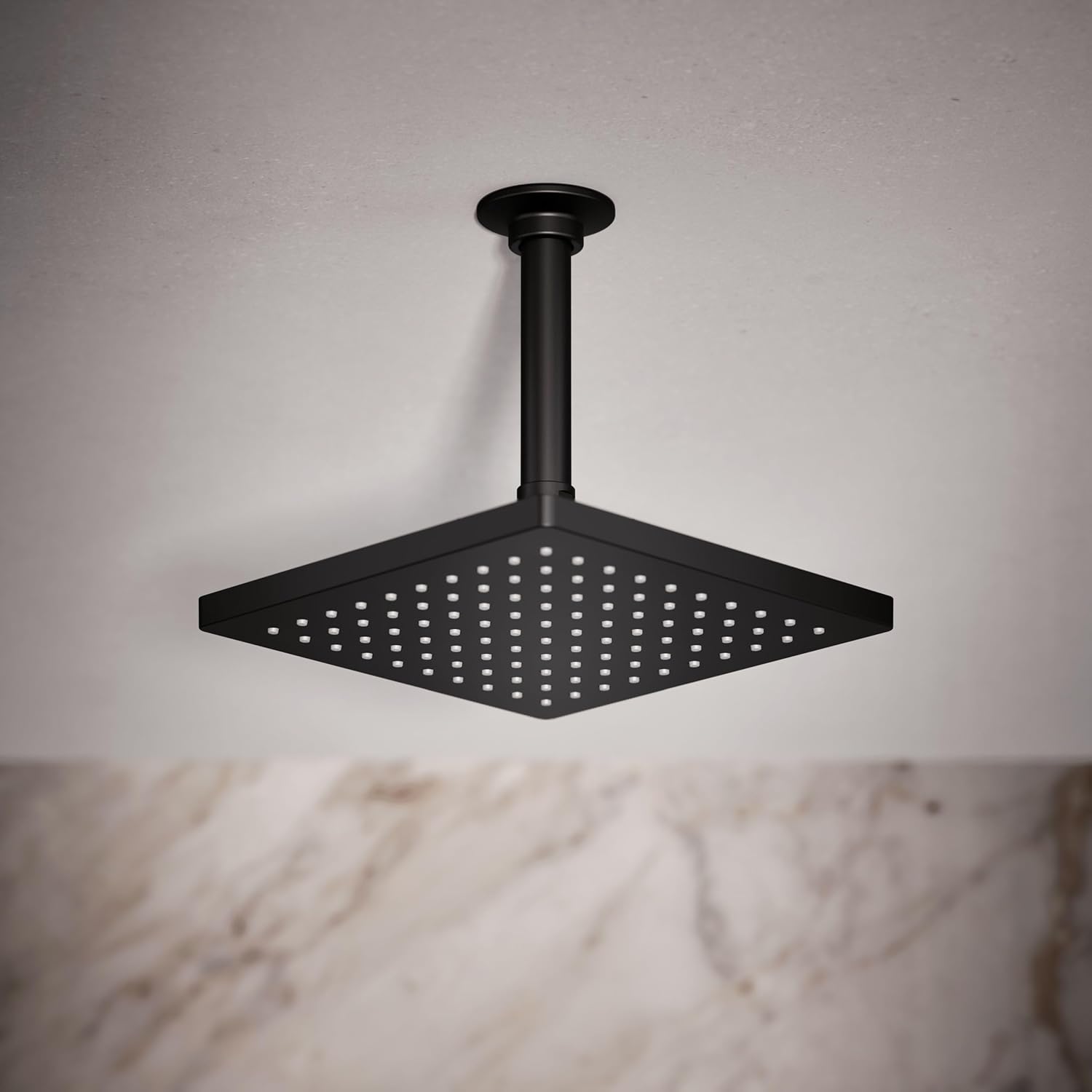
You’ve narrowed your master-bath renovation to three names — Hansgrohe, Grohe, and Kohler — and now you’re staring at three marketing phrases that tell you almost nothing useful: Select, SmartActive, and Katalyst. All three brands sell shower heads in the $150–$400 range that promise a massage-like spray experience, meaning they push water through nozzles in patterns designed to target muscle tension the way a therapist’s hands might — less like a garden hose, more like focused pressure applied in pulses or concentrated streams. The problem is that each brand engineers that sensation differently, and the difference is genuinely felt in your shoulders and lower back, not just on a spec sheet. This article translates the brand language into honest sensory descriptions, shows the real tradeoffs at each price point, and ends with a direct decision rule so you can stop second-guessing and start ordering.
How Each Brand Actually Generates the Massage Effect
Before the head-to-head, it’s worth understanding the three distinct philosophies — because once you see them clearly, the “which brand” question answers itself faster.
Hansgrohe: Pulse Frequency Over Raw Pressure
Hansgrohe’s massage mode, found across the Croma Select E ($200–$280) and Raindance Select lines, works by alternating between jets in a rapid cycling pattern — essentially a mechanical pulse. The brand calls the resulting sensation Select spray, their marketing term for the multi-mode selector system, and the underlying jet structure uses what they call PowderRain for a soft mist alongside a distinct concentrated mode for massage. What owners consistently report — and what reviewers at Architectural Digest (“The Best Luxury Shower Heads,” 2025) and This Old House (“Best Shower Heads,” 2025 buyer’s guide) have highlighted in their luxury shower-head roundups — is that Hansgrohe’s massage setting feels rhythmic and deliberate, more like a percussion massage tool than a steady blast. It is excellent for tension headaches and upper-back knots, where a pulsing rhythm matters more than brute force. The tradeoff: the pulse is relatively narrow in coverage area. You will move the head around to work a larger muscle group rather than standing still.
Speakman
$140.30
In stock on Amazon
Check price on AmazonGrohe: Pressure Concentration With Directional Control
Grohe’s SmartActive technology (found in the Rainshower SmartActive series, $180–$320) takes a different approach. Rather than pulse cycling, SmartActive concentrates the full flow into a tighter nozzle cluster, increasing felt pressure without exceeding the EPA WaterSense 1.8 GPM flow limit — the federally recognized efficiency threshold that most premium shower heads now target or fall under. According to the EPA WaterSense program’s showerhead efficiency specifications, published at watersense.epa.gov, compliant heads must deliver no more than 2.0 GPM at 80 PSI supply pressure. Grohe’s engineering squeezes sensation from that budget by narrowing the spray radius rather than adding volume. The result, across aggregated owner reviews, is a massage mode that feels more like a focused hydro-jet: constant, strong, and directional. For post-workout lower-back recovery or IT-band tension, that concentrated, non-pulsing pressure tends to get cited more positively than Hansgrohe’s cycling approach. The coverage area per second is smaller, but the point-pressure is noticeably higher. Wirecutter’s 2025 guide “The Best Shower Head” specifically notes that concentrated-jet massage modes outperform pulsing modes for users with a single, recurring sore spot rather than generalized tension.
Kohler
$14.96
In stock on Amazon
Check price on AmazonKohler: Air-Induction for a Softer, Larger-Format Massage
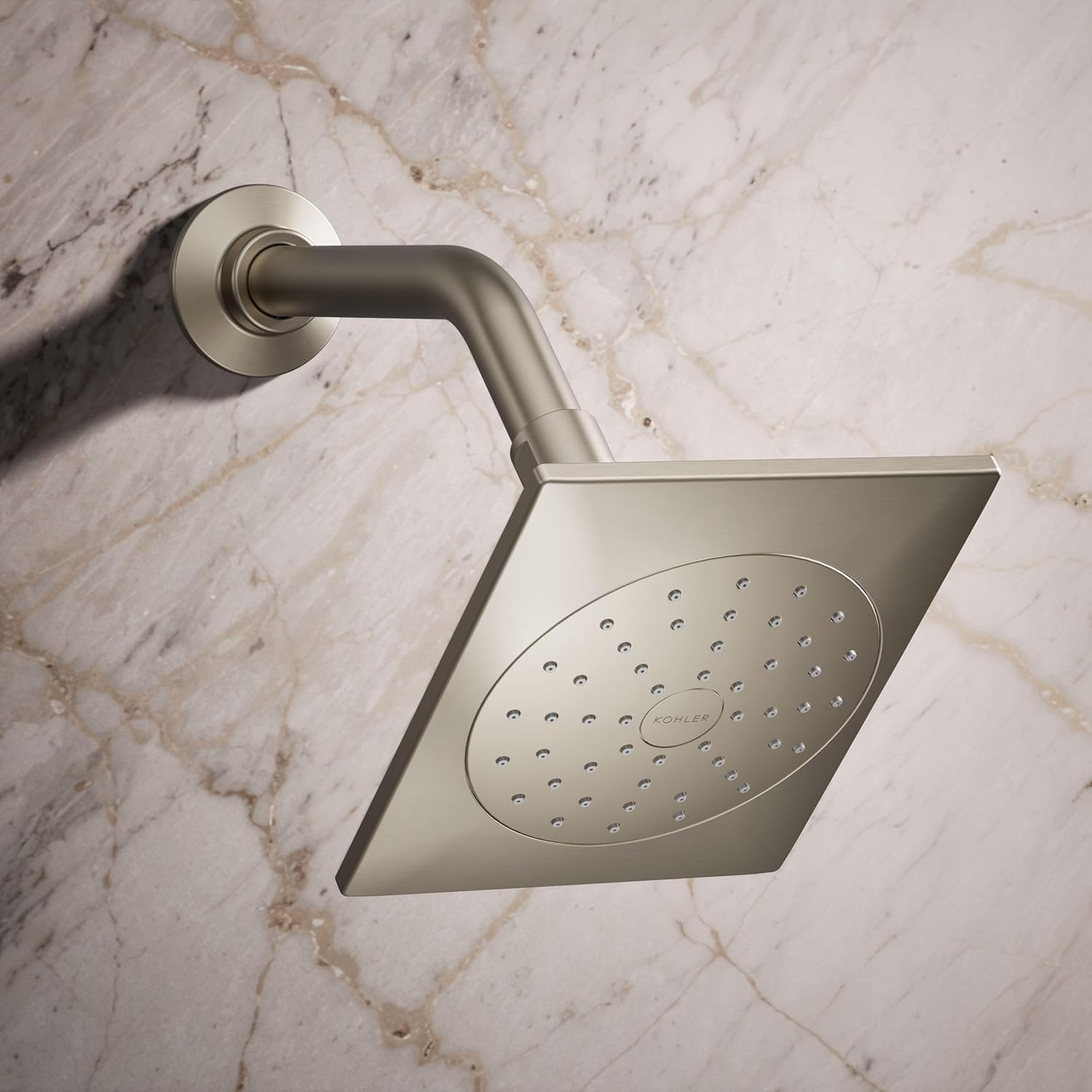
Kohler’s Katalyst technology (present in the Artifacts and higher Moxie tiers, $200–$400+) uses a fundamentally different mechanism: it injects air into the water stream before it exits the nozzle. Air-induction — mixing air into the water at the spray plate — produces larger, heavier individual droplets that carry more kinetic energy per drop without increasing GPM. The sensation is often described by owners as “silkier” or “fuller” than a standard massage spray — closer to a rainfall with weight behind it than a concentrated jet. Architectural Digest’s 2025 roundup “The Best Luxury Shower Heads” consistently places Kohler’s Katalyst in a sensory category of its own: broader coverage, lower perceived sharpness, but more enveloping pressure across a wider area. For stress-reduction and whole-back relaxation rather than targeted muscle therapy, Katalyst’s wide-format massage is frequently the preferred outcome. For pinpointed tension relief, reviewers note it underperforms Grohe’s concentrated jet.
Moen
$189.65
In stock on Amazon
Check price on AmazonBy the Numbers: Pressure, Flow, and Price at a Glance
| Brand / Model | Price Range | Flow Rate | Massage Mechanism | Best Sensory Outcome |
|---|---|---|---|---|
| Hansgrohe Croma Select E | $200–$280 | 1.75 GPM | Pulsing jet cycle | Rhythmic tension relief, headaches |
| Grohe Rainshower SmartActive | $180–$320 | 1.75 GPM | Concentrated constant jet | Point-pressure, post-workout recovery |
| Kohler Artifacts / Katalyst | $200–$400+ | 1.75–2.0 GPM | Air-induction, wide droplet | Full-back relaxation, stress reduction |
All three meet or exceed EPA WaterSense efficiency standards at 80 PSI supply pressure — the rating pressure used in standard spec documentation, per the EPA WaterSense program’s showerhead efficiency specifications available at watersense.epa.gov. Real-world performance varies with your home’s actual supply pressure, typically 45–80 PSI, which matters more than any single spec number when predicting how a massage mode will feel in practice.
The Tradeoffs No Brand Mentions in Their Marketing
Installation and valve compatibility
This Old House’s 2025 buyer’s guide “Best Shower Heads” consistently notes that luxury shower heads above $200 often require attention to existing valve compatibility, especially for slide-bar or combo systems. Hansgrohe’s Croma Select E is largely drop-in compatible with standard ½-inch IPS connections, and owners report straightforward installation. Grohe’s SmartActive heads are similarly standard-thread, but the brand’s recommended pairing with their Grohtherm thermostatic valves — while not required — produces noticeably better pressure consistency. Kohler’s Artifacts series has broader valve compatibility documentation, but several Katalyst models in the $300+ tier are designed around Kohler’s own Rite-Temp or DTV valve ecosystems. If you are doing a full valve replacement, that is a natural fit. If you are swapping only the head in an existing rough-in, verify compatibility before ordering.
Finish availability and gray-market risk
At the $200–$400 tier, finish matters as much as function — brushed gold, matte black, and polished nickel all carry meaningfully different prices and lead times across retailers. Architectural Digest’s 2025 luxury shower coverage “The Best Luxury Shower Heads” flags that discontinued or regional finish variants of premium European brands — Hansgrohe and Grohe both manufacture primarily in Germany — sometimes appear at significant discounts through non-authorized U.S. retailers. Those units may carry voided warranties or incompatible pressure ratings for North American supply systems. This Old House’s 2025 guide “Best Shower Heads” specifically recommends purchasing Hansgrohe and Grohe through authorized U.S. distributors, where North American-spec flow restrictors and warranty coverage apply. Kohler, manufactured for North American markets domestically, carries less gray-market risk in standard retail channels.
Durability and long-run owner reports
Across aggregated long-term owner reviews representing two or more years of use, the patterns by brand are consistent. Hansgrohe’s Select button mechanism — the rotating or push-button mode selector — draws occasional complaints about stiffness after mineral buildup in hard-water markets; the brand’s recommendations for descaling maintenance are worth following. Grohe’s SmartActive nozzle clusters are silicone-tipped through their EasyClean system, which resists mineral deposits effectively. Owners in high-hardness water areas frequently cite this as a meaningful durability advantage. Kohler’s Katalyst air-induction plate is generally low-maintenance but less field-repairable if the air-mixing channel clogs; owners report that Kohler’s warranty service response is among the fastest of the three brands for U.S. buyers.
Matching Massage Mode to Wellness Outcome
This is the decision layer most comparison articles skip, and it is the one that matters most.
Tension headaches and upper-back tightness
Hansgrohe’s pulsing rhythm wins here. The cycling pressure pattern — alternating pulses rather than a steady stream — mimics percussive therapy in a way that concentrated jets do not. Owners who specifically cite headache relief in reviews disproportionately reference Hansgrohe’s dedicated massage mode. This Old House’s 2025 shower-head guide “Best Shower Heads” singles out Hansgrohe’s Select spray for buyers whose primary complaint is stress-pattern muscle clenching in the neck and shoulders.
Post-workout recovery and lower-back or IT-band pressure
Grohe’s concentrated SmartActive jet is the practitioner choice. The sustained, high-point-pressure stream allows you to hold it on a specific muscle group — glutes, lumbar erectors, posterior shoulder — long enough to create the hydrostatic pressure effect that mimics manual therapy. Wirecutter’s 2025 guide “The Best Shower Head” notes that buyers who describe post-exercise soreness as their primary driver consistently prefer concentrated jets over pulsing or wide-format modes. This is the mode that physical-therapy-adjacent buyers tend to return to.
Stress reduction and full-body relaxation
Kohler’s Katalyst wide-format massage is the answer for this use case. The enveloping, heavier-droplet coverage across a broader area produces more of a whole-body decompression sensation than a targeted therapy tool. Architectural Digest’s 2025 roundup “The Best Luxury Shower Heads” describes Katalyst’s output as the closest a residential shower head comes to a spa rainfall experience with genuine therapeutic weight behind it. If your primary wellness goal is decompressing at the end of the day rather than treating a specific muscle complaint, Katalyst’s approach aligns more directly with that outcome.
The Decision Rule
If you are still comparing after all of this, here is the frame.
If your use case is targeted muscle therapy — specific knots, post-training recovery, or a physical-therapy-adjacent routine — buy the Grohe Rainshower SmartActive. The concentrated jet at a $180–$280 price point delivers the best point-pressure per dollar, Grohe’s EasyClean nozzles hold up well in hard-water markets, and the installation is uncomplicated in most existing rough-ins.
Kohler
$14.96
In stock on Amazon
Check price on AmazonIf your primary complaint is tension headaches, shoulder tightness, or stress-pattern muscle clenching — buy the Hansgrohe Croma Select E. The pulsing massage mode is genuinely distinct from anything Grohe or Kohler offers at this tier, and the $200–$280 price sits comfortably within reach. Budget for descaling maintenance in hard-water zip codes.
Speakman
$140.30
In stock on Amazon
Check price on AmazonIf you are renovating a full master bath, replacing the valve, and the primary goal is a spa-caliber sensory experience rather than targeted therapy — buy Kohler Artifacts with Katalyst, accept that you are spending $300–$400+, and pair it with a Kohler thermostatic valve for pressure consistency. The wide-format massage is the most enveloping experience of the three, and Kohler’s domestic manufacturing means fewer gray-market complications when buying through standard U.S. retail.
Moen
$189.65
In stock on Amazon
Check price on AmazonOne practical note regardless of brand: supply pressure in your home determines how much of any shower head’s rated performance you actually feel. Per the EPA WaterSense program’s showerhead efficiency specifications at watersense.epa.gov, all spec ratings are measured at 80 PSI. If your supply runs 45–55 PSI — common in older municipal systems and upper-floor installations — the concentrated jet modes on all three brands will feel softer than reviews suggest. A pressure gauge on your supply line, checked before you order, can save you from blaming the fixture for a plumbing constraint.
All three brands are genuinely good. The right one is the one whose engineering philosophy matches what your body actually needs from a shower.